7Other Road Users
Andere Verkehrsteilnehmer
Learn how to safely interact with every type of road user you will encounter in Germany. This lesson covers pedestrians, cyclists, motorcyclists, trucks, buses, emergency vehicles, trams, and school buses. You will learn mandatory passing distances, priority rules, blind spot awareness, and the Rettungsgasse formation that could save lives.
Pedestrians: Crossings, Children, and Vulnerable Groups
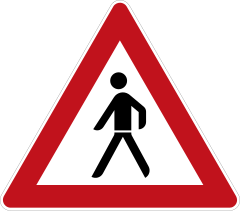
Pedestrians are the most vulnerable road users. A collision at even moderate speed can be fatal. German traffic law therefore gives pedestrians strong protections, and the exam tests your knowledge of every pedestrian-related rule.
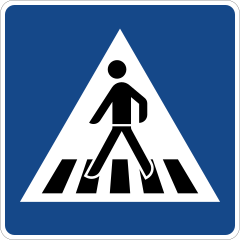
Zebra crossings (Zebrastreifen, sign 350): at a marked pedestrian crossing, you must yield to pedestrians who are ON the crossing or who are clearly about to step onto it. You must approach zebra crossings at a speed that allows you to stop in time. You may NOT overtake another vehicle directly before or on a zebra crossing — the overtaken vehicle may be blocking your view of a pedestrian. If traffic is stopped at a zebra crossing, you must also stop, even if you cannot see a pedestrian yourself.
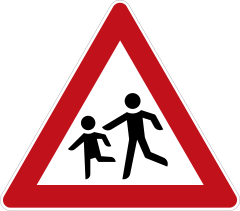
Children (sign 136): children are unpredictable. They may run into the road without looking, dart between parked cars, or change direction suddenly. When you see sign 136 (children) or when you are near schools, playgrounds, or residential areas, reduce your speed so that you can stop within a very short distance. Legally, if a child runs into the road and you hit them, the burden is on you to prove you were driving appropriately for the situation. In practice, courts almost always hold the driver responsible near these zones.
Elderly persons: older pedestrians may move slowly, have impaired hearing or vision, and may not react quickly to vehicle signals. Give them extra time at crossings and do not honk impatiently.
Blind and visually impaired pedestrians: a person carrying a white cane or accompanied by a guide dog is legally blind. You must be especially cautious. If a blind person is at the edge of the road, they may be trying to cross — stop and wait. Do not rely on them hearing your vehicle, especially with modern quiet electric cars. In certain situations, you may gently use your horn to alert them, but only if it helps rather than startles.
Pedestrians in pedestrian zones (Fußgängerzone, sign 242.1): vehicles are generally prohibited in pedestrian zones unless a supplementary sign permits specific vehicle types (e.g., delivery vehicles during certain hours). When permitted to drive in a pedestrian zone, you must drive at walking speed (Schrittgeschwindigkeit, roughly 4-7 km/h) and yield to ALL pedestrians at ALL times. Pedestrians have absolute priority in these zones.
Tips
- At a zebra crossing, slow down enough that you can stop immediately. Do NOT wave pedestrians across — they must decide for themselves, and your wave could endanger them if another lane's traffic does not stop.
- Near schools and playgrounds: drive as if a child could appear at any moment, because they can and do.
- A person with a white cane is legally blind. Stop and wait — do not assume they can see or hear you.
Common Mistakes
- Overtaking a vehicle that has stopped at a zebra crossing — the stopped vehicle may be yielding to a pedestrian you cannot see.
- Honking at elderly pedestrians to hurry them across the road — this is aggressive and may cause them to panic and fall.
- Driving through a pedestrian zone at normal speed because 'no pedestrians are visible' — the speed limit is walking speed regardless of how empty the zone appears.
Cyclists: Passing Distance and Path Rules
Cyclists are common on German roads, and their vulnerability demands specific protective rules. The most critical rule for the exam is the mandatory passing distance.
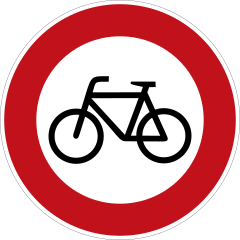
Passing distance: when overtaking a cyclist, you must maintain a lateral distance of at least 1.5 meters within built-up areas (innerorts) and at least 2.0 meters outside built-up areas (außerorts). This distance is measured from the widest point of your vehicle to the nearest part of the cyclist or their bicycle. If the road is too narrow to maintain this distance, you must stay behind the cyclist and wait until you can pass safely — even if this means driving at 15 km/h for several minutes.
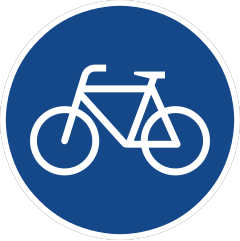
Cycle paths (Radweg, sign 237): when a dedicated cycle path marked with sign 237 (white bicycle on blue circle) exists, cyclists MUST use it. They are not permitted on the road. However, if the cycle path is blocked, unusable, or covered in ice, cyclists may use the road. When a road has an advisory cycle lane (Schutzstreifen — dashed line at the road edge with bicycle symbols), cars may drive on it briefly when necessary (e.g., to pass oncoming traffic), but only if no cyclist is present. When a road has a mandatory cycle lane (Radfahrstreifen — solid line), cars may NOT drive on it at all.
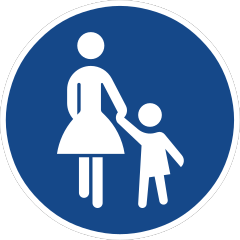
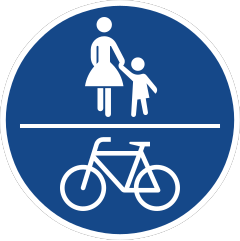
Combined pedestrian and cycle paths (signs 240, 241): sign 240 shows a pedestrian and cyclist on a blue circle, meaning the path is shared — both pedestrians and cyclists use the same space. Sign 241 shows them separated by a vertical line, meaning pedestrians on one side and cyclists on the other. As a driver, you must watch for cyclists who may exit these paths onto the road, especially at intersections and driveways.
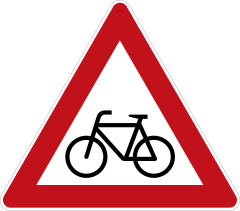
Right-turning danger: the most dangerous situation for cyclists occurs when you turn right and a cyclist is going straight in the cycle lane beside you. Check your right mirror and right blind spot before EVERY right turn. Sign 138 (cyclists crossing) warns of this at specific locations. Large trucks have an even bigger blind spot — this is a leading cause of cyclist fatalities in Germany.
Door zone accidents (Dooring): when you park on a street with a cycle lane, always use the "Dutch reach" — open your door with your far hand, which forces you to turn and check for approaching cyclists. Opening a car door into a cyclist is a violation and can cause severe injuries.
Tips
- 1.5m passing distance in town, 2.0m outside town. If you cannot maintain this, do NOT pass — wait.
- Before EVERY right turn, check your right mirror and blind spot for cyclists going straight in the cycle lane.
- Use the Dutch reach when opening your car door: open with the far hand so your body turns to check for cyclists.
Common Mistakes
- Squeezing past a cyclist with less than 1.5m because 'they are slow' — this is both illegal and extremely dangerous.
- Turning right without checking the cycle lane — the cyclist going straight has the right of way.
- Parking on a mandatory cycle lane (solid line) even briefly — this forces cyclists into traffic.
Motorcyclists: Visibility and Vulnerability
Motorcyclists are harder to see and more vulnerable than car occupants. A collision that would cause minor car damage can be fatal for a motorcyclist. German traffic law places responsibility on all drivers to be aware of motorcyclists.
Visibility challenges: motorcycles have a much narrower profile than cars. They can "hide" in your blind spots, behind windshield pillars (A-pillars), and in the gaps between vehicles. At intersections, always look specifically for motorcycles — a quick glance may miss them because your brain is scanning for car-sized objects. This is known as "inattentional blindness."
Speed misjudgment: because motorcycles are small, approaching motorcycles often appear to be moving slower or be further away than they actually are. When judging whether to turn or pull out, give motorcycles MORE time than you would give a car. If a motorcycle is approaching and you are unsure whether you have enough time, wait.
Lane positioning: motorcyclists may ride in different positions within their lane — left, center, or right — to improve visibility, avoid road hazards, or prepare for turns. Do not interpret their lane position as an invitation to share their lane. A motorcycle is entitled to the full lane width. Never try to squeeze past a motorcycle within the same lane.
Weather and road conditions: motorcycles are much more affected by wet roads, oil spills, gravel, leaves, and road markings (which become slippery when wet). In bad weather, give motorcyclists extra following distance because their braking distance may be longer and they may need to avoid hazards you would drive over without issue.
Intersections and overtaking: the most dangerous situation for motorcyclists is at intersections where a turning vehicle fails to see the approaching motorcycle. Before turning left across oncoming traffic, look twice for motorcycles. When overtaking a motorcyclist, maintain the same 1.5m/2.0m lateral distance as for cyclists. Motorcyclists are affected by the air displacement from passing vehicles, especially trucks.
Tips
- At intersections, actively look for motorcycles — they are narrow and easy to miss with a quick glance.
- An approaching motorcycle appears further away and slower than a car at the same distance and speed. Give extra margin.
- Never share a lane with a motorcycle. They are entitled to the full lane width, just like a car.
Common Mistakes
- Misjudging a motorcycle's speed because of its small profile — it may be much closer and faster than it appears.
- Passing a motorcycle with insufficient lateral distance — maintain at least 1.5m inside built-up areas.
- Not checking for motorcycles when changing lanes — they can easily sit in your blind spot.
Trucks and Large Vehicles: Blind Spots and Behavior
Trucks, buses, and other large vehicles have massive blind spots and different driving characteristics than passenger cars. Understanding these differences is critical for safety and is tested on the exam.
Blind spots: a large truck has four major blind spots. (1) Directly in front of the cab — the driver cannot see vehicles or pedestrians very close to the front. (2) Along the right side — this is the largest and most dangerous blind spot, extending from the cab to well behind the trailer. Cyclists and small cars can be completely invisible here. (3) Along the left side — smaller than the right but still significant. (4) Directly behind the trailer — the driver has no rear window; they rely entirely on mirrors, which have blind areas.
The rule of thumb: if you cannot see the truck's mirrors, the truck driver cannot see you. Avoid lingering in a truck's blind spots. When passing a truck, pass decisively — do not hover alongside it.
Turning behavior: trucks with trailers need significantly more space to turn. A truck turning right will often swing wide to the left first, then turn right. The trailer cuts the corner much tighter than the cab. This means: (1) do not try to squeeze between a right-turning truck and the curb — the trailer will crush you, (2) do not assume a truck drifting left is changing lanes — it may be setting up for a right turn, (3) maintain distance when following a turning truck.
Spray and wind effects: following a truck in rain creates heavy spray that can almost completely blind you. Increase your following distance significantly. When overtaking a truck, expect a sudden crosswind effect when you emerge from the truck's wind shadow. On highways, you may also experience a suction effect when a truck passes you — hold the steering wheel firmly.
Speed differences on hills: trucks are much slower going uphill and may gain speed quickly going downhill. On multi-lane roads, trucks may pull into the left lane to overtake another truck at a speed difference of only 2-3 km/h, creating a "rolling roadblock." Be patient — this is legal. On the Autobahn, trucks are limited to 80 km/h, creating large speed differences with car traffic.
Tips
- If you cannot see the truck driver's mirrors, the driver cannot see you. Move forward or backward until you are visible.
- Never position yourself between a right-turning truck and the curb — the trailer will cut the corner.
- In rain, increase following distance behind trucks dramatically — spray reduces visibility to near zero.
Common Mistakes
- Cycling or driving between a right-turning truck and the curb — the trailer sweeps across this space.
- Lingering in a truck's right-side blind spot — move through it quickly or stay behind.
- Following a truck too closely in rain and losing all visibility due to spray.
Buses: Stop Priority and Passing Rules
Buses have special priority rules in Germany that many students fail to learn. The most critical rule: when a bus signals to pull away from a bus stop, you MUST yield to it.
Bus stop priority (StVO section 20): when a bus at a marked bus stop activates its left turn signal to indicate it wants to re-enter traffic, vehicles in that lane must slow down and, if necessary, stop to let the bus pull out. This applies within built-up areas (innerorts). The bus has an explicit legal right to re-enter traffic, and you must accommodate it. You may not accelerate to pass the bus before it pulls out. This rule exists because buses serve the public interest and constantly stopping and starting at every stop would make them unacceptably slow without this priority.
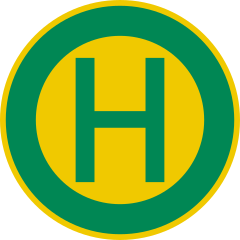
Passing a bus at a stop: when a bus is stopped at a bus stop (sign 224 — a green "H" on a yellow background), you must pass at a safe speed that does not endanger passengers boarding or alighting. If passengers must cross the road (e.g., the bus stop has no raised platform), you must be prepared to stop. Inside built-up areas, you must pass at walking speed (Schrittgeschwindigkeit) if passengers are in the roadway. Outside built-up areas, this rule still applies if passengers are crossing.
When a bus has its hazard warning lights (Warnblinker) activated at a stop, you must proceed at walking speed and be prepared to stop — in BOTH directions. This means even oncoming traffic must slow to walking speed. The hazard lights signal that passengers, potentially including children, may be crossing the road from either side.
School buses (Schulbus): school buses follow the same rules as regular buses but with extra caution because children are involved. When you see a bus marked "Schulbus" with its hazard lights on, expect children to behave unpredictably — running across the road, stepping out from behind the bus, or crossing without looking.
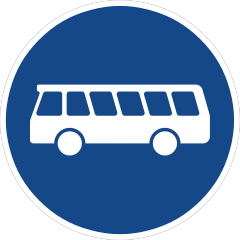
Bus lanes (Busspur): some roads have dedicated bus lanes marked with "BUS" on the road surface or indicated by signs. You may NOT use these lanes unless you are a bus, taxi (where permitted), or another vehicle type specifically allowed by supplementary signs. Driving in a bus lane can result in a fine and creates a hazard for buses using their dedicated space.
Tips
- When a bus at a stop signals left, you MUST yield and let it pull out. Do not try to race past it.
- Bus with hazard lights (Warnblinker) at a stop: walking speed in BOTH directions. Children may cross from anywhere.
- Bus lanes are for buses (and sometimes taxis) only. Using them in a car is a violation.
Common Mistakes
- Trying to pass a bus that is signaling to pull away from a stop — you must yield to the bus.
- Passing a stopped bus with hazard lights at normal speed — you must slow to walking speed in both directions.
- Assuming bus stop rules only apply to the lane behind the bus — oncoming traffic must also slow when hazard lights are on.
Emergency Vehicles and the Rettungsgasse (Rescue Lane)
When an emergency vehicle (Einsatzfahrzeug) approaches with blue flashing lights (Blaulicht) AND an audible siren (Martinshorn), you must immediately make way. This is not optional — failure to do so can result in heavy fines and, in extreme cases, criminal charges if someone dies because of your obstruction.
On normal roads: move to the right side of the road and stop if necessary to let the emergency vehicle pass. If you are at a red light, you may carefully move into the intersection to make room, but only if you can do so without causing danger. Check all directions before moving on red.
On the Autobahn and multi-lane roads: form a Rettungsgasse (rescue lane). The Rettungsgasse is formed between the leftmost lane and the lane to its immediate right. Vehicles in the leftmost lane move as far left as possible. Vehicles in all other lanes move as far right as possible. This creates a clear lane between the first and second lane from the left.
For a two-lane road (in each direction): left lane moves left, right lane moves right. Rescue lane forms in the middle.
For a three-lane road: left lane moves left, middle and right lanes move right. Rescue lane forms between the left and middle lanes.
CRITICAL timing: you must form the Rettungsgasse as soon as traffic slows down or stops — not when you first hear the siren. By the time you hear a siren in a traffic jam, it may be too late to create space. The law requires you to form the Rettungsgasse preemptively when traffic comes to a standstill on any multi-lane road.
Important: only vehicles with BOTH blue lights AND siren have full emergency priority. A vehicle with only blue flashing lights (no siren) is requesting caution but does not have the same absolute right of way. However, you should still make way — it may be approaching a scene and about to activate the siren.
You may NOT follow an emergency vehicle through a red light or use the cleared path for your own benefit. Once the emergency vehicle has passed, return to normal lane positions. The cleared lane is exclusively for emergency vehicles.
Tips
- Form the Rettungsgasse as soon as traffic stops — do not wait for the siren. Between the leftmost lane and the next lane to the right.
- Blue lights + siren = absolute priority. Blue lights only = caution and make way if possible.
- After the emergency vehicle passes, return to your lane. Do NOT follow it through cleared traffic.
Common Mistakes
- Waiting until you hear the siren to start forming the Rettungsgasse — by then the path may be blocked.
- Forming the Rettungsgasse in the wrong position — it always goes between the leftmost lane and the second lane, regardless of how many lanes there are.
- Following the emergency vehicle through the cleared path or through a red light — this is illegal.
Trams (Straßenbahnen): Special Right of Way
Trams (Straßenbahnen) have special right-of-way rules in Germany that go beyond what most road users have. Because trams run on fixed rails and cannot swerve, other traffic must accommodate them.
General priority: trams generally have priority over other vehicles. At intersections where a tram and a car arrive simultaneously and right-of-way is ambiguous, the tram goes first. This is sometimes called "Schienenvorrang" (rail priority). However, trams must still obey traffic lights when present — a tram at a red light must stop just like any other vehicle (they have their own signal system with white bar indicators).
Passing stopped trams: when a tram stops to pick up or drop off passengers and there is no raised platform (island), passengers may need to cross the road to reach the sidewalk. You must: (1) stop and wait if passengers are boarding or alighting, (2) proceed only at walking speed (Schrittgeschwindigkeit) if the doors are closed and no passengers are in the road, (3) NEVER drive between the tram and the platform/sidewalk when passengers are present. This applies in BOTH directions — oncoming traffic must also stop.
Tram tracks on the road: in many German cities, trams share the road with cars. You may drive on tram tracks that are on your side of the road, but you must move off the tracks when a tram approaches from behind. The tram cannot leave the tracks — you must. If you hear a tram bell behind you, move to the side immediately.
Right-of-way at intersections: at traffic-light-controlled intersections, follow your signal. At uncontrolled intersections, trams generally have priority. At intersections with rechts-vor-links, trams STILL generally take priority due to their inability to stop quickly and their operational importance. The exam tests whether you know to yield to trams even in situations where you would normally have priority over a regular vehicle.
Overtaking trams: you may overtake a moving tram on the right side (not the left, which would put you on the wrong side of the road) unless road markings or signs prohibit it. When overtaking on the right, watch for passengers who may step off the tram at the next stop.
Tips
- When a tram stops and passengers cross the road, you MUST stop completely — in both directions.
- If a tram approaches from behind on shared tracks, move off the tracks immediately. The tram cannot swerve.
- At ambiguous intersections, yield to the tram. It cannot stop quickly and has operational priority.
Common Mistakes
- Driving past a stopped tram while passengers are crossing — this is extremely dangerous and illegal.
- Blocking tram tracks when traffic is congested — if a tram cannot pass, you are blocking public transit for hundreds of people.
- Assuming trams will stop for you at an uncontrolled intersection — yield to the tram.
School Buses and Other Special Vehicles
School buses and other special vehicles have specific rules designed to protect vulnerable passengers and ensure safe operations.
School buses (Schulbus): a vehicle marked "Schulbus" or showing the school bus sign follows the same general rules as public transit buses, but with heightened expectations. When a school bus stops with hazard lights on, pass at walking speed in BOTH directions and be prepared to stop immediately. Children may suddenly appear from behind the bus, cross the road without looking, or run back to retrieve something they dropped. The exam expects you to treat school bus stops with maximum caution.
The critical scenario: you approach a school bus stopped on the opposite side of the road with its hazard lights flashing. A child runs out from in front of the bus into your lane. The exam tests whether you were already traveling at walking speed (correct) or at normal speed (wrong). If you were at walking speed, you can stop in time. If not, the responsibility is yours.
Slow-moving vehicles: vehicles like tractors, road maintenance machines, and other slow vehicles (under 25 km/h) display a slow vehicle marker — a red-and-orange reflective triangle on the rear. You may overtake them even where overtaking is otherwise restricted (e.g., past a no-overtaking sign for motor vehicles), because the no-overtaking prohibition typically applies only to motor vehicles capable of exceeding 25 km/h.
Vehicles with flashing amber/orange lights: construction and maintenance vehicles use amber flashing lights to indicate they are working. They may be moving slowly, stopping unexpectedly, or occupying parts of the road. Give them a wide berth and be patient.
Funeral processions and organized convoys: you must not interrupt or cut into a closed procession (geschlossener Verband). Wait for the entire group to pass before proceeding. This includes military convoys, funeral processions, and organized cycling groups.
Horse-drawn vehicles and riders: horses are easily startled by engine noise, honking, or fast-approaching vehicles. Pass horses at a walk or very low speed, with maximum lateral distance. Do not honk. If a horse appears agitated, stop and wait for the rider to signal that it is safe to pass.
Tips
- School bus with hazard lights = walking speed in BOTH directions. Expect children to appear from anywhere.
- Slow vehicles (red-orange triangle) may be overtaken even in no-overtaking zones for motor vehicles.
- Never cut into a closed convoy, funeral procession, or organized group. Wait for the entire formation to pass.
Common Mistakes
- Passing a school bus with hazard lights at normal speed because 'the children are on the other side' — they may cross the road.
- Honking at or speeding past a horse — horses spook easily, potentially throwing the rider into traffic.
- Trying to squeeze through a gap in a funeral procession or organized convoy — this is illegal and disrespectful.
Key Rules
When overtaking cyclists, maintain at least 1.5m distance inside built-up areas and 2.0m outside.
Why: Cyclists can wobble, swerve to avoid potholes, or be pushed by wind gusts. Insufficient distance at car speed can be fatal.
Example: You approach a cyclist on a country road. Oncoming traffic prevents you from giving 2m clearance. You slow down and stay behind the cyclist until the oncoming lane is clear.
Penalty: Passing a cyclist too closely: 30 EUR. If endangering the cyclist: 80 EUR + 1 point. Causing an accident: 100 EUR + 1 point + potential criminal liability.
When a bus at a bus stop signals left, you must yield and let it re-enter traffic.
Why: Public transit depends on schedule reliability. Without this rule, buses would be trapped at stops during heavy traffic, degrading service for thousands of passengers.
Example: A city bus is stopped at a marked bus stop. It activates its left turn signal. You are approaching in the right lane. You must slow down or stop to let the bus pull out, even though you have the right of way on the road.
Penalty: Failing to yield to a departing bus: 60 EUR + 1 point.
Form the Rettungsgasse (rescue lane) as soon as traffic stops on a multi-lane road — between the leftmost lane and the next lane to its right.
Why: Emergency vehicles need a clear path to reach accident scenes. In a traffic jam, there is no other way through. Delays of even 30 seconds can mean the difference between life and death.
Example: Traffic on the three-lane Autobahn comes to a stop. Left lane vehicles pull as far left as possible. Middle and right lane vehicles pull as far right as possible. A clear lane opens between the left and middle lanes.
Penalty: Failing to form Rettungsgasse: 200-320 EUR + 2 points + 1 month driving ban. If blocking an emergency vehicle: criminal charges possible.
Pass a stopped tram with passengers at walking speed only. Stop completely if passengers are crossing the road.
Why: Tram passengers often must step into the road to board or alight. They are focused on the tram, not on approaching cars. Driving at speed through this area is extremely dangerous.
Example: A tram stops and opens its doors. There is no raised platform. Three passengers step onto the road to walk to the sidewalk. You stop your vehicle completely and wait until all passengers have cleared the road.
Penalty: Passing a tram stop unsafely: 60 EUR + 1 point. If endangering passengers: 70-80 EUR + 1 point.
Related Traffic Signs
Video Resources
Andere Verkehrsteilnehmer - Fahrschule Theorie
Complete guide to interacting with pedestrians, cyclists, trucks, buses, and emergency vehicles on German roads. Covers passing distances, blind spots, and priority rules with animated scenarios.
Rettungsgasse bilden - So geht es richtig
Step-by-step visual guide to forming the Rettungsgasse on two-lane, three-lane, and four-lane roads. Shows correct positioning from the driver's perspective with real Autobahn footage.