All Signs

Warning Signs (Gefahrzeichen)

Triangular signs with red borders that warn of hazards ahead. Reduce speed and proceed with caution.

63 signs

Curves & Road Shape24
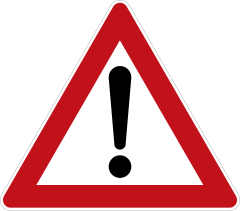
General hazard

General hazard

Gefahrstelle

Sign 101

Warning of a hazard ahead that is not covered by a specific warning sign.

Rules

Reduce speed and proceed with caution. Be prepared to stop. Watch for supplementary signs that specify the type of hazard.
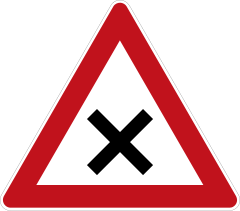
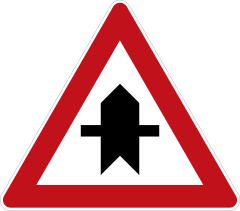
Crossroads or junction

Crossroads or junction

Kreuzung oder Einmündung

Sign 102

Warning of an upcoming intersection or junction where the right-before-left rule applies.

Rules

Reduce speed and be prepared to yield to traffic from the right (rechts-vor-links). Check both directions carefully before proceeding.
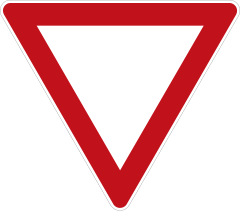
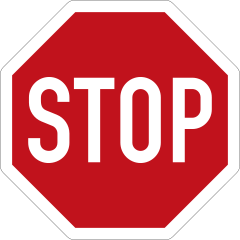
Related:Give way / YieldStop! Give wayPriority at next intersection
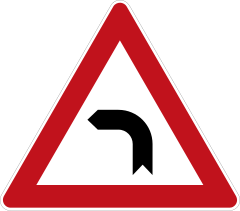
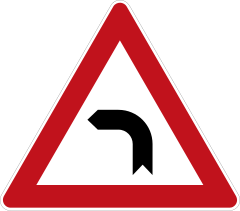
Curve (left)

Curve (left)

Kurve (links)

Sign 103

Warning of a dangerous left curve ahead.

Rules

Reduce speed before the curve. Do not brake in the curve itself. Stay in your lane — centrifugal force pushes the vehicle outward.

Related:Double curve (left first)
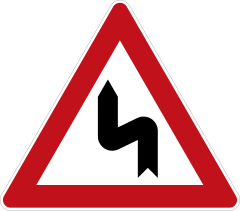
Double curve (left first)

Double curve (left first)

Doppelkurve (zunächst links)

Sign 105

Warning of two consecutive curves, the first bending to the left.

Rules

Reduce speed before entering the curves. Maintain steady speed through both curves. Do not overtake.

Related:Curve (left)
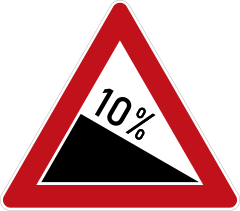
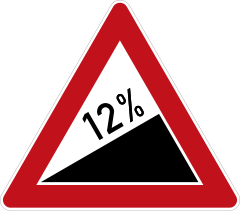
Steep downhill grade

Steep downhill grade

Gefälle

Sign 108

Warning of a steep downhill slope ahead. The percentage indicates the grade.

Rules

Use engine braking (lower gear). Do not ride the brakes as they may overheat and fail. Trucks and heavy vehicles: use low gear before the slope begins.

Related:Steep uphill grade
Steep uphill grade

Steep uphill grade

Steigung

Sign 110

Warning of a steep uphill slope ahead.

Rules

Be prepared for slow-moving heavy vehicles. Maintain sufficient following distance. In winter, ensure enough momentum to avoid stalling on ice.

Related:Steep downhill grade
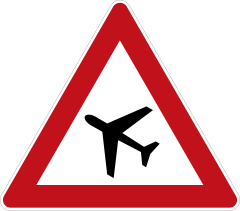
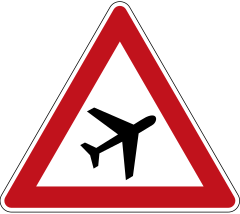
Low-flying aircraft

Low-flying aircraft

Flugbetrieb

Sign 101-10

Warning of low-flying aircraft near an airfield. Sudden loud noise may startle drivers.

Rules

Be prepared for sudden loud aircraft noise. Do not stop on the road to watch planes. Stay alert and keep driving.
Related:General hazard
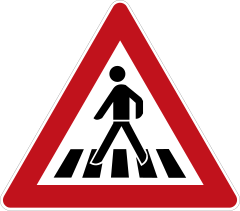
Pedestrian crossing warning

Pedestrian crossing warning

Fußgängerüberweg (Gefahrzeichen)

Sign 101-11

Warning of a pedestrian crossing (Zebrastreifen) ahead.

Rules

Reduce speed. Be prepared to stop for pedestrians at the crossing. Do not overtake at or directly before the crossing.

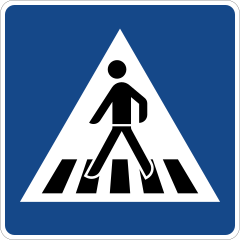
Related:Pedestrian crossing (zebra crossing)Pedestrians
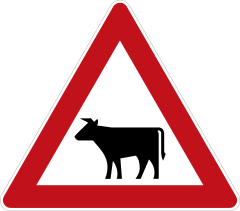
Cattle crossing

Cattle crossing

Viehtrieb

Sign 101-12

Warning that livestock may be driven across or along the road.

Rules

Reduce speed. Be prepared to stop for animals on the road. Do not honk as it may startle the animals.
Related:General hazard
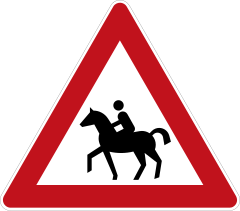
Horse riders

Horse riders

Reiter

Sign 101-13

Warning that horse riders may be on or crossing the road.

Rules

Reduce speed. Pass horses slowly and with ample distance. Do not honk — horses are easily startled.

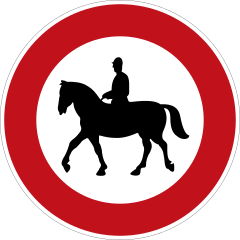
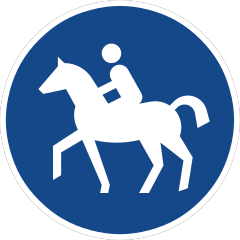
Related:Bridle pathNo horse riders
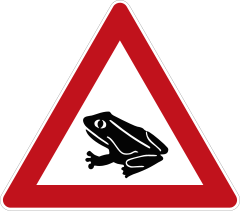
Amphibian migration

Amphibian migration

Amphibienwanderung

Sign 101-14

Warning of amphibians (frogs, toads) migrating across the road, typically in spring.

Rules

Reduce speed significantly, especially at dusk and dawn. Watch for volunteers helping amphibians cross.
Related:General hazard
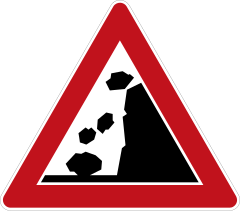
Falling rocks

Falling rocks

Steinschlag

Sign 101-15

Warning of danger from falling rocks or rockslides.

Rules

Do not stop in the danger zone. Drive through quickly but at a safe speed. Watch for debris on the road.
Related:General hazard
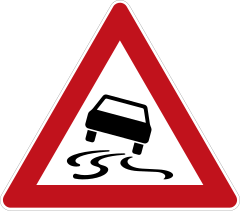
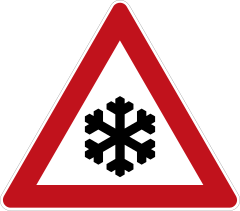
Snow or ice

Snow or ice

Schnee- oder Eisglätte

Sign 101-51

Warning of danger from snow or ice on the road.

Rules

Reduce speed significantly. Increase following distance. Avoid sudden braking, steering, or acceleration. Use winter tires.

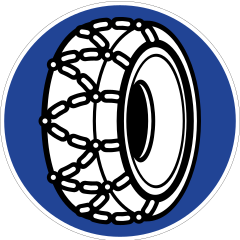
Related:Snow chains mandatory
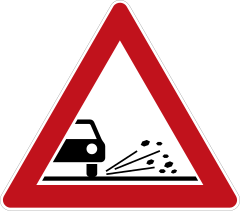
Loose gravel

Loose gravel

Splitt, Schotter

Sign 101-52

Warning of loose gravel or chippings on the road surface.

Rules

Reduce speed. Loose gravel reduces grip and increases braking distance. Maintain extra distance to vehicles ahead.
Related:General hazard
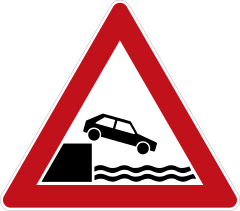
Riverbank / quayside

Riverbank / quayside

Ufer

Sign 101-53

Warning that the road runs along a riverbank, quay, or waterside with risk of falling in.

Rules

Drive carefully. Stay away from the edge. Particularly dangerous in darkness, fog, or icy conditions.
Related:General hazard
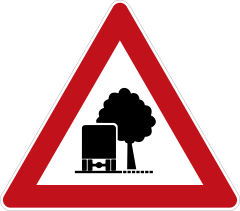
Insufficient overhead clearance

Insufficient overhead clearance

Unzureichendes Lichtraumprofil

Sign 101-54

Warning that the overhead clearance is limited ahead (e.g., low bridge, tunnel).

Rules

Check your vehicle height. Tall vehicles, vehicles with roof loads, or raised trailers may not fit through.

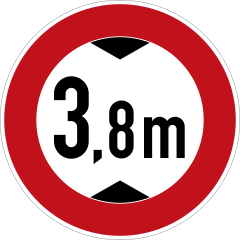
Related:Height limit
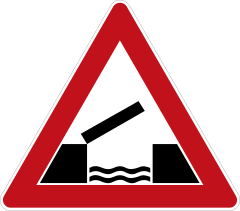
Opening bridge / drawbridge

Opening bridge / drawbridge

Bewegliche Brücke

Sign 101-55

Warning of a drawbridge or opening bridge ahead.

Rules

Observe traffic signals at the bridge. Stop when barriers lower or lights flash. Never try to cross while the bridge is opening or closing.
Related:General hazard
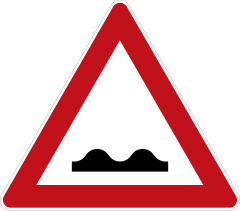
Uneven road surface

Uneven road surface

Unebene Fahrbahn

Sign 112

Warning of bumps, potholes, or an uneven road surface ahead.

Rules

Reduce speed. Uneven roads can cause loss of vehicle control, especially at higher speeds.
Curve (left)

Curve (left)

Kurve (links)

Sign 103-20

Warning of a left curve ahead.

Rules

Reduce speed before entering the curve.
Related:Curve (left)
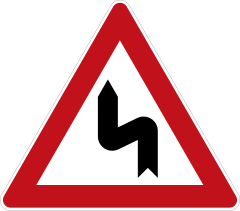
Double curve (first left)

Double curve (first left)

Doppelkurve (zunächst links)

Sign 105-20

Warning of a double curve, first turning left.

Rules

Reduce speed before entering the curves.
Related:Double curve (left first)
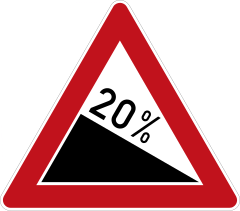
Steep descent (left variant)

Steep descent (left variant)

Gefälle (links)

Sign 108-20

Warning of a steep descent ahead.

Rules

Use engine braking. Do not ride the brakes continuously.
Related:Steep downhill gradeSteep uphill grade
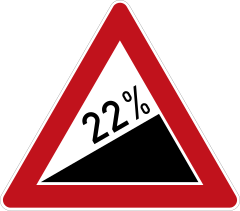
Steep incline (left variant)

Steep incline (left variant)

Steigung (links)

Sign 110-22

Warning of a steep incline ahead.

Rules

Be prepared for slow vehicles. Consider downshifting.

Related:Steep uphill gradeSteep downhill grade
Curve (right)

Curve (right)

Kurve (rechts)

Sign 104

Warning of a dangerous right curve ahead.

Rules

Reduce speed before the curve. Do not brake in the curve. Stay in your lane as centrifugal force pushes the vehicle outward.

Related:Curve (left)Double curve (right first)
Double curve (right first)

Double curve (right first)

Doppelkurve (zunächst rechts)

Sign 106

Warning of two consecutive curves, the first bending to the right.

Rules

Reduce speed before the curves. Maintain steady speed through both. Do not overtake.

Related:Double curve (left first)Curve (right)

Road Conditions & Hazards13
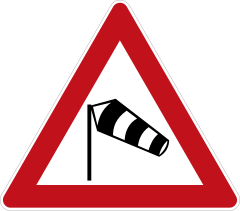
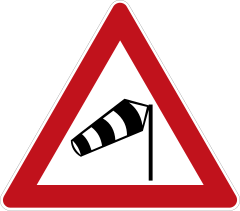
Crosswind

Crosswind

Seitenwind

Sign 114

Warning of strong crosswinds ahead, typically on bridges, embankments, or open stretches.

Rules

Grip the steering wheel firmly with both hands. Reduce speed. Be especially careful with high-profile vehicles, trailers, and motorcycles.

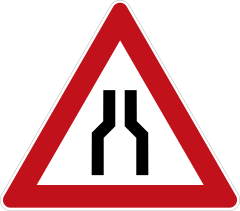
Road narrows (both sides)

Road narrows (both sides)

Engstelle

Sign 117

The road narrows from both sides ahead.

Rules

Reduce speed. If the road is too narrow for two vehicles, the zipper merge principle applies. Oncoming traffic may have priority if road markings indicate so.

Related:Road narrows (right side)Road narrows on one side
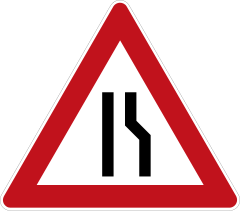
Road narrows (right side)

Road narrows (right side)

Verengte Fahrbahn

Sign 120

The road narrows from the right side.

Rules

Stay to the left of center. Be prepared for oncoming traffic partially in your lane.

Related:Road narrows (both sides)Road narrows on one side
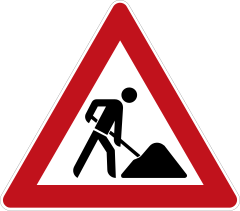
Road works

Road works

Baustelle

Sign 123

Warning of a construction zone ahead.

Rules

Reduce speed. Follow temporary traffic signs and markings (yellow markings override white). Watch for construction vehicles and workers. Lane changes may be required.

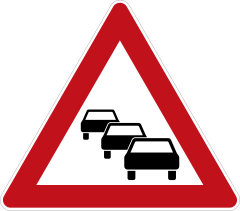
Traffic jam

Traffic jam

Stau

Sign 124

Warning of congestion or a traffic jam ahead.

Rules

Reduce speed immediately. Turn on hazard warning lights (Warnblinkanlage) to alert drivers behind you. On Autobahn: form a rescue lane (Rettungsgasse) immediately.

Road narrows on one side

Road narrows on one side

Einseitig verengte Fahrbahn

Sign 121

The road narrows from one side ahead.

Rules

Reduce speed. Be prepared for oncoming traffic partially in your lane. Give way if necessary.

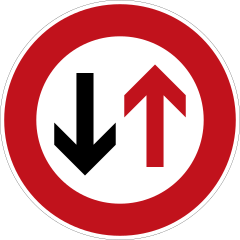
Related:Road narrows (right side)Road narrows (both sides)Give way to oncoming traffic
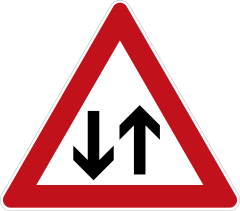
Two-way traffic

Two-way traffic

Gegenverkehr

Sign 125

Warning that you are entering a section with oncoming traffic.

Rules

Keep right. Be prepared for oncoming vehicles. Reduce speed and increase caution.

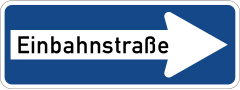
Related:Give way to oncoming trafficOne-way street
Crosswind from left

Crosswind from left

Seitenwind von links

Sign 117-20

Warning of strong crosswind from the left.

Rules

Grip the steering wheel firmly. Be alert for gusts.
Related:Road narrows (both sides)
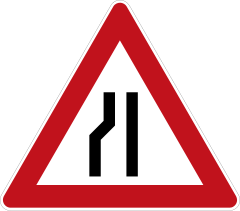
Road narrows on left

Road narrows on left

Einengung links

Sign 121-20

Warning that the road narrows on the left side.

Rules

Move toward center. Watch for oncoming traffic.

Related:Road narrows on one sideRoad narrows (right side)
Snow or ice

Snow or ice

Schnee- oder Eisglätte

Sign 113

Warning of a road section prone to snow or ice.

Rules

Reduce speed significantly. Increase following distance. Avoid sudden steering, braking, or acceleration.

Related:Crosswind
Falling rocks

Falling rocks

Steinschlag

Sign 115

Warning of a stretch where rocks or debris may fall onto the road.

Rules

Watch for rocks on the road. Reduce speed. Do not stop unnecessarily in the danger zone.

Loose gravel

Loose gravel

Splitt, Schotter

Sign 116

Warning of loose gravel or chippings on the road surface.

Rules

Reduce speed to avoid stone chips hitting following vehicles. Maintain extra following distance.

Riverbank

Riverbank

Ufer

Sign 122

Warning that the road runs close to a riverbank or waterfront.

Rules

Stay on the road. Reduce speed, especially in wet or foggy conditions. Risk of vehicles leaving the road into water.

Crossings & Vulnerable Road Users12
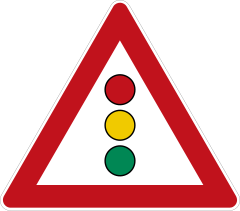
Traffic lights ahead

Traffic lights ahead

Lichtzeichenanlage

Sign 131

Warning that the road ahead is controlled by traffic lights.

Rules

Be prepared to stop. If the light changes to yellow, stop if it is safe to do so. Do not accelerate to 'beat' a yellow light.

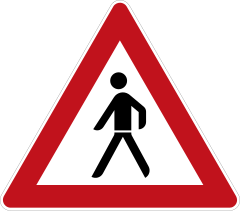
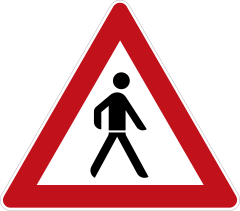
Pedestrians

Pedestrians

Fußgänger

Sign 133

Warning of a pedestrian crossing or area with frequent pedestrians ahead.

Rules

Reduce speed and watch for pedestrians stepping onto the road. At marked crossings (Zebrastreifen), pedestrians have absolute right of way.

Related:Pedestrian crossing (zebra crossing)
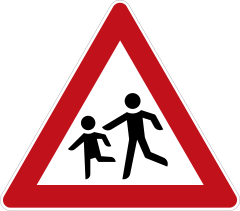
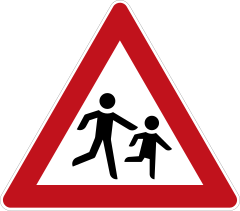
Children

Children

Kinder

Sign 136

Warning of an area where children may be present (schools, playgrounds).

Rules

Reduce speed significantly. Children are unpredictable — they may run onto the road without looking. Be especially vigilant during school hours.

Related:Pedestrians
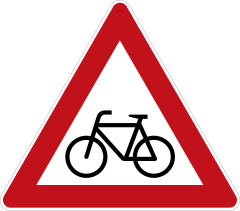
Cyclists

Cyclists

Radverkehr

Sign 138

Warning that cyclists may cross or ride on the road ahead.

Rules

Watch for cyclists. Maintain minimum 1.5m passing distance in built-up areas, 2m outside built-up areas. Check mirrors and blind spots before turning.

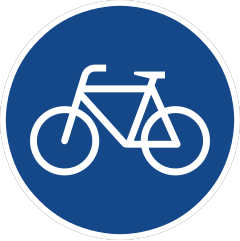
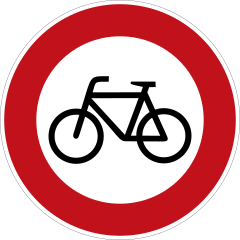
Related:Bicycle path (mandatory)No bicycles
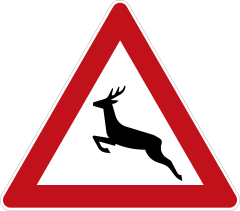
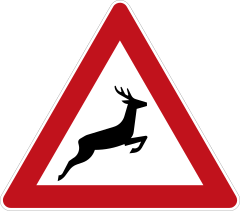
Wild animals

Wild animals

Wildwechsel

Sign 142

Warning of an area where wild animals frequently cross the road.

Rules

Reduce speed, especially at dawn and dusk. If an animal is on the road: brake, dip headlights, honk. Do not swerve — a collision with a tree is more dangerous than hitting an animal.

Pedestrians (left variant)

Pedestrians (left variant)

Fußgänger (links)

Sign 133-20

Warning of pedestrians crossing from the left.

Rules

Watch for pedestrians and be ready to stop.
Related:Pedestrians
Children (left variant)

Children (left variant)

Kinder (links)

Sign 136-20

Warning of children on the left, e.g. near schools or playgrounds.

Rules

Drive very slowly and be extra cautious. Children may run into the road.
Related:Children
Wild animals (left variant)

Wild animals (left variant)

Wildwechsel (links)

Sign 142-20

Warning of wild animals crossing from the left.

Rules

Reduce speed, especially at dusk and dawn. Watch roadside carefully.

Related:Wild animals
Movable bridge

Movable bridge

Bewegliche Brücke

Sign 128

Warning of a bridge that can be raised or swung open for ship traffic.

Rules

Observe signal lights and barriers. Stop when the bridge is being raised. Never attempt to cross when barriers are closing.

Pedestrian crossing ahead

Pedestrian crossing ahead

Fußgängerüberweg

Sign 129

Warning of a pedestrian crossing (zebra crossing) ahead.

Rules

Slow down and be prepared to stop. Pedestrians on the crossing have absolute right of way. Do not overtake vehicles that have stopped at the crossing.

Related:PedestriansChildren
Pedestrians

Pedestrians

Fußgänger

Sign 134

Warning of a road section frequently crossed by pedestrians.

Rules

Reduce speed and watch for pedestrians entering the road. Be especially careful near schools and residential areas.

Related:Pedestrian crossing aheadPedestriansChildren
Cattle or livestock

Cattle or livestock

Viehtrieb, Tiere

Sign 140

Warning of a road section where livestock may be on or crossing the road.

Rules

Reduce speed and be prepared to stop. Animals are unpredictable. Do not honk or flash lights as this may frighten them.

Related:Wild animals

Level Crossings & Bridges13

Railway crossing with barriers

Railway crossing with barriers

Bahnübergang mit Schranke

Sign 151

A railway crossing with barriers or half-barriers is 240m ahead (3 red stripes).

Rules

Reduce speed. When barriers are lowering or closed, STOP. Never try to go around barriers. Wait until barriers are fully raised and the road is clear.

Related:
152
Level crossing without barriersLevel crossing with full barriers
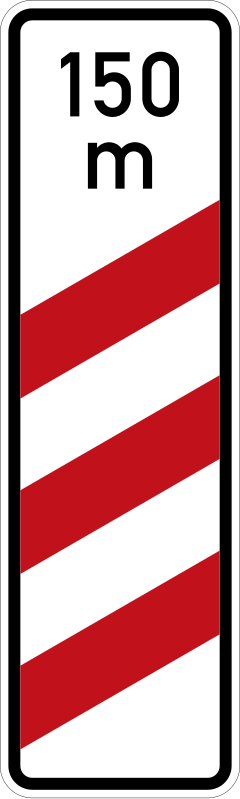
Three-stripe beacon (240m to level crossing)

Three-stripe beacon (240m to level crossing)

Dreistreifige Bake (240 m)

Sign 157

Railway crossing approach marker at 240 meters.

Rules

Begin reducing speed. A railway crossing is 240m ahead. No overtaking from here.

Related:Railway crossing with barriersTwo-stripe beacon (160m to level crossing)One-stripe beacon (80m to level crossing)
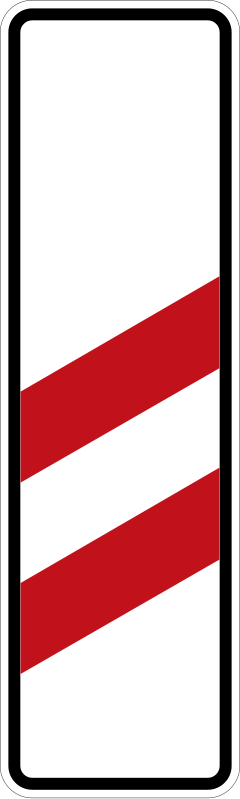
Two-stripe beacon (160m to level crossing)

Two-stripe beacon (160m to level crossing)

Zweistreifige Bake (160 m)

Sign 159

Railway crossing approach marker at 160 meters.

Rules

Continue reducing speed. The railway crossing is getting closer.

Related:Railway crossing with barriersThree-stripe beacon (240m to level crossing)One-stripe beacon (80m to level crossing)
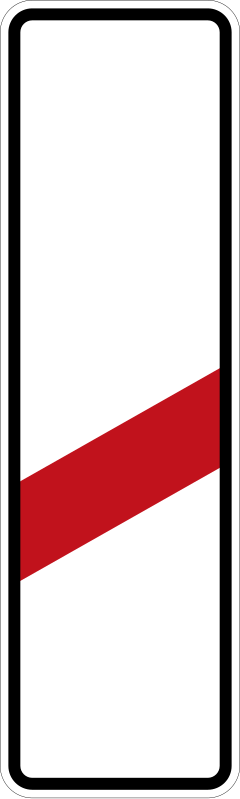
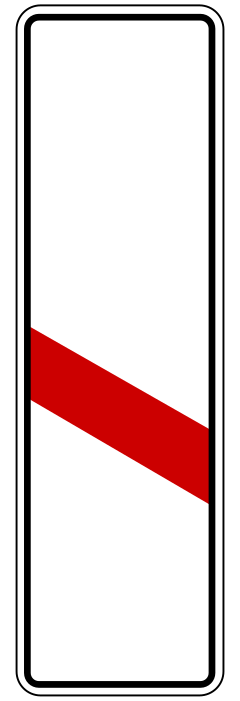
One-stripe beacon (80m to level crossing)

One-stripe beacon (80m to level crossing)

Einstreifige Bake (80 m)

Sign 162

Railway crossing approach marker at 80 meters.

Rules

Be ready to stop. If barriers are down or lights flash, stop immediately.

Related:Railway crossing with barriersThree-stripe beacon (240m to level crossing)Two-stripe beacon (160m to level crossing)
Amphibian migration

Amphibian migration

Amphibienwanderung

Sign 144

Warning of a road section where amphibians (frogs, toads) cross during migration season.

Rules

Drive slowly and carefully during spring migration period. Watch for volunteers assisting with amphibian crossings.
Related:Wild animals
Amphibian migration (placed on left)

Amphibian migration (placed on left)

Amphibienwanderung (Aufstellung links)

Sign 144-20

Warning of amphibian migration, sign placed on the left side of the road.

Rules

Drive slowly during migration season. The left placement indicates the primary crossing direction.

Related:Amphibian migration
Equestrians

Equestrians

Reiter

Sign 145

Warning of a road section frequently used by horse riders.

Rules

Reduce speed. Pass horses slowly and with plenty of room. Avoid honking or making sudden movements.

Related:Cattle or livestock
Level crossing with half-barriers

Level crossing with half-barriers

Bahnübergang mit Halbschranke

Sign 150

Warning of an approaching railway level crossing equipped with half-barriers.

Rules

Be prepared to stop. When barriers lower, stop before them. Never try to go around half-barriers. Check for trains from both directions.

Related:Railway crossing with barriersLevel crossing with full barriersTwo-stripe beacon (160m to level crossing)
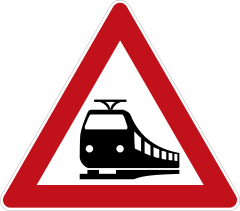
Level crossing without barriers

Level crossing without barriers

Bahnübergang ohne Schranken

Sign 153

Warning of a railway crossing without barriers or half-barriers ahead.

Rules

Approach with extreme caution. Reduce speed. Look and listen for trains in both directions before crossing. Trains always have right of way.

Related:Level crossing with half-barriersRailway crossing with barriersTwo-stripe beacon (160m to level crossing)
Level crossing with full barriers

Level crossing with full barriers

Bahnübergang mit Schranken

Sign 156

Warning of a railway crossing with full barriers ahead.

Rules

Stop when barriers begin to lower. Wait until barriers are fully raised before proceeding. Never drive around barriers.

Related:Level crossing with half-barriersRailway crossing with barriersLevel crossing without barriers
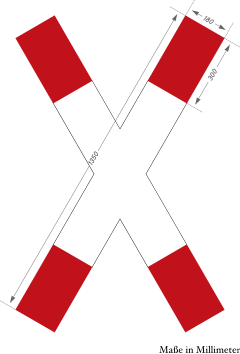
St. Andrew's cross (upright)

St. Andrew's cross (upright)

Andreaskreuz (stehend)

Sign 160

Railway level crossing marker for single-track railway. Trains have absolute right of way.

Rules

Stop and look both ways. Give way to rail traffic. This sign stands directly at the crossing. Wait if flashing lights or signals indicate a train.

Related:Level crossing with half-barriersRailway crossing with barriersSt. Andrew's cross (with lightning bolt)
St. Andrew's cross (with lightning bolt)

St. Andrew's cross (with lightning bolt)

Andreaskreuz (liegend)

Sign 161

Railway level crossing marker for multi-track or electrified railway. Trains may come from both directions simultaneously.

Rules

Extreme caution required. After one train passes, a second may come immediately from the opposite direction. Wait until the crossing is completely clear.
Related:Level crossing with half-barriersSt. Andrew's cross (upright)
Level crossing distance marker (2 stripes, left)

Level crossing distance marker (2 stripes, left)

Bahnübergang Entfernungsbake (2 Streifen, links)

Sign 162-20

Indicates approximately 160m distance to a railway level crossing. Left-side placement variant.

Rules

Prepare to reduce speed. Be ready to stop at the crossing. Two stripes means two-thirds of the way there.

Related:One-stripe beacon (80m to level crossing)Two-stripe beacon (160m to level crossing)

Other1

St. Andrew's cross

St. Andrew's cross

Andreaskreuz

Sign 201

Directly at a railway crossing without barriers. Trains have absolute right of way.

Rules

Stop and look both ways. Listen for trains. If a train is approaching or you can hear one, WAIT. At crossings with half-barriers, never drive around them. Multiple tracks: a second train may follow immediately.

Related:Railway crossing with barriers
152
Level crossing without barriers